
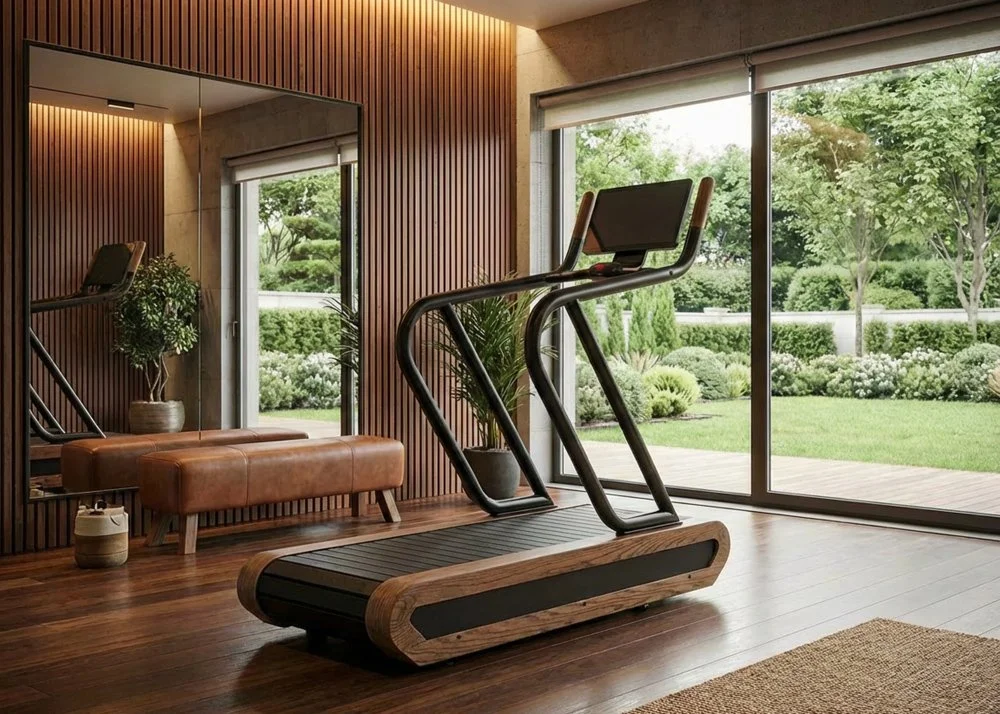
First Impressions — More Sculpture Than Machine
The first time you see the NOHRD Citius treadmill, you know it’s not your average treadmill. It’s built with premium wood, refined finishes, and a design language that belongs in a boutique wellness space rather than a commercial gym.
As someone who lives at the intersection of design and performance, I immediately appreciated that it doesn’t try to hide its ambition. It’s functional, yes, but it’s also deliberately beautiful.
Unlike typical treadmills made from plastic and welded steel, Citius feels considered. It’s meant to sit proudly in a gym that’s also a design statement. For clients who care about aesthetics as much as athletic capability, that alone makes it different.
If you expect cardio equipment to look utilitarian and bulky — prepare to be surprised.
Performance That Surprised — And Opened Possibilities
Speed, Incline & Precision
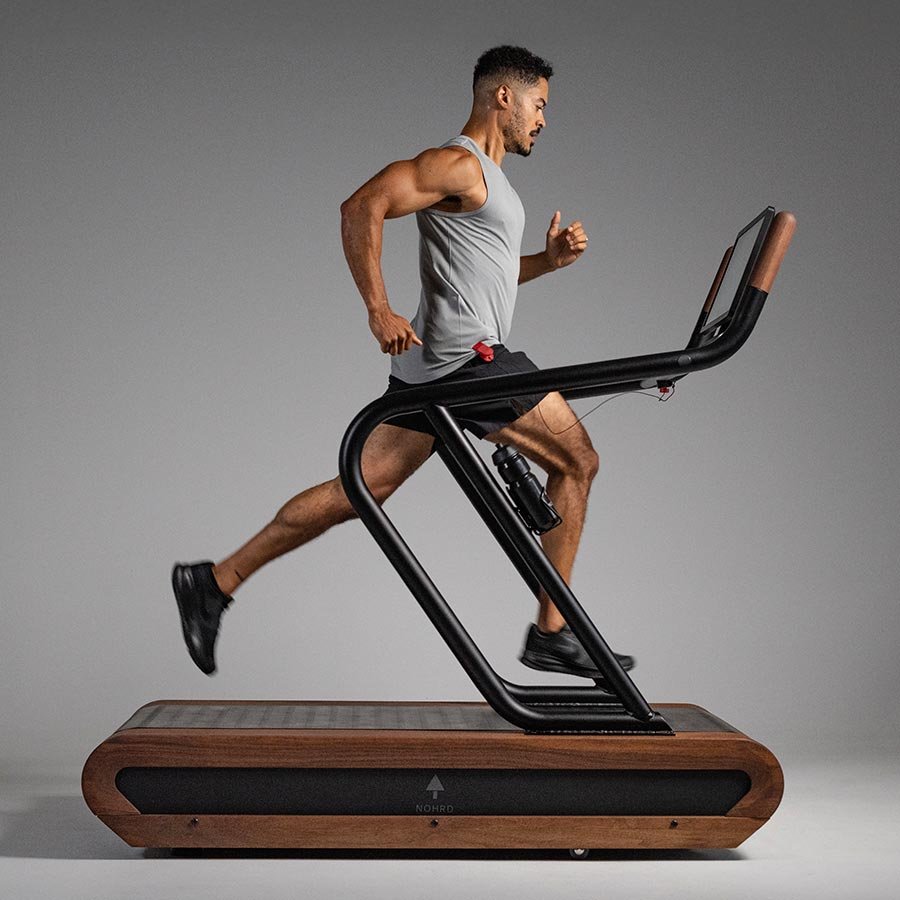
Top speed of 30 km/h — fast enough for serious sprints or high-intensity intervals.
Speed adjustments as precise as 0.1 km/h for fine control during rehab walks, steady runs, or explosive sprints.
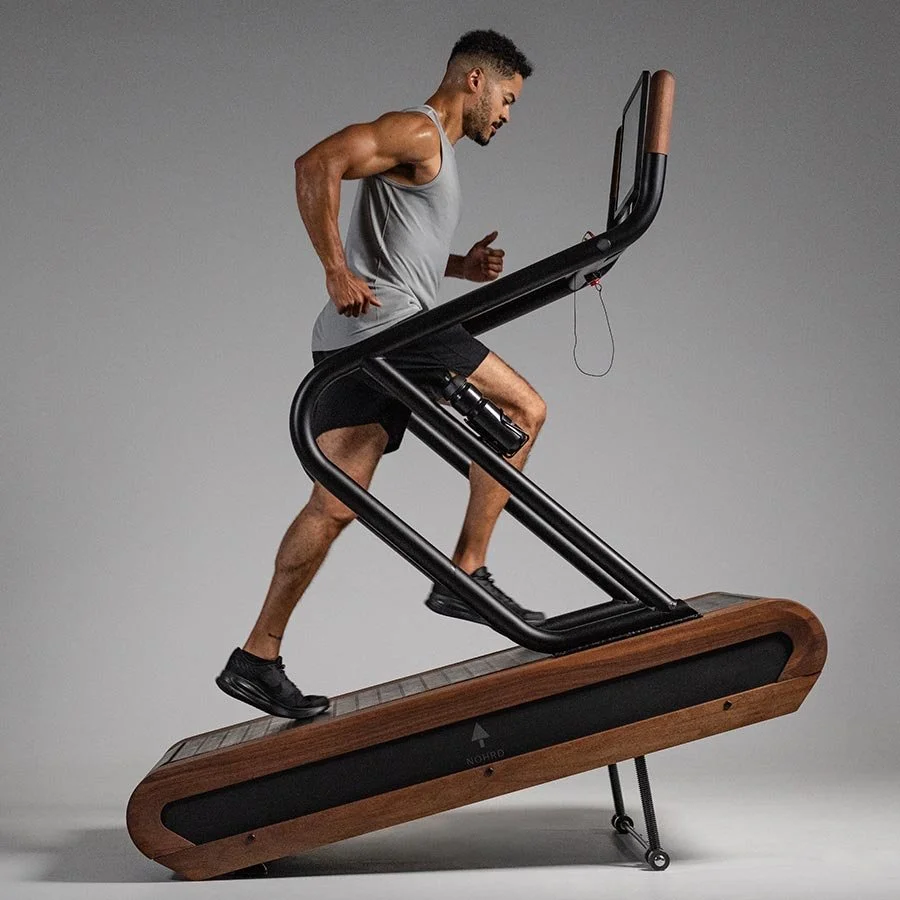
Incline up to 25 percent — far steeper than standard, offering true hill-simulation training.
That combination — high speed, steep incline, and precise control — makes Citius incredibly versatile. Whether you’re recovering, walking, sprinting, or climbing, it handles it all.
Slat-Belt Comfort & Cushioning
Citius uses a slat-belt design with rubberized slats for up to 90 percent shock absorption. It feels like a perfect bridge between a cushioned treadmill and outdoor pavement — protective but stable. For clients concerned about impact or longevity, it’s a standout.
Push & Pull Versatility
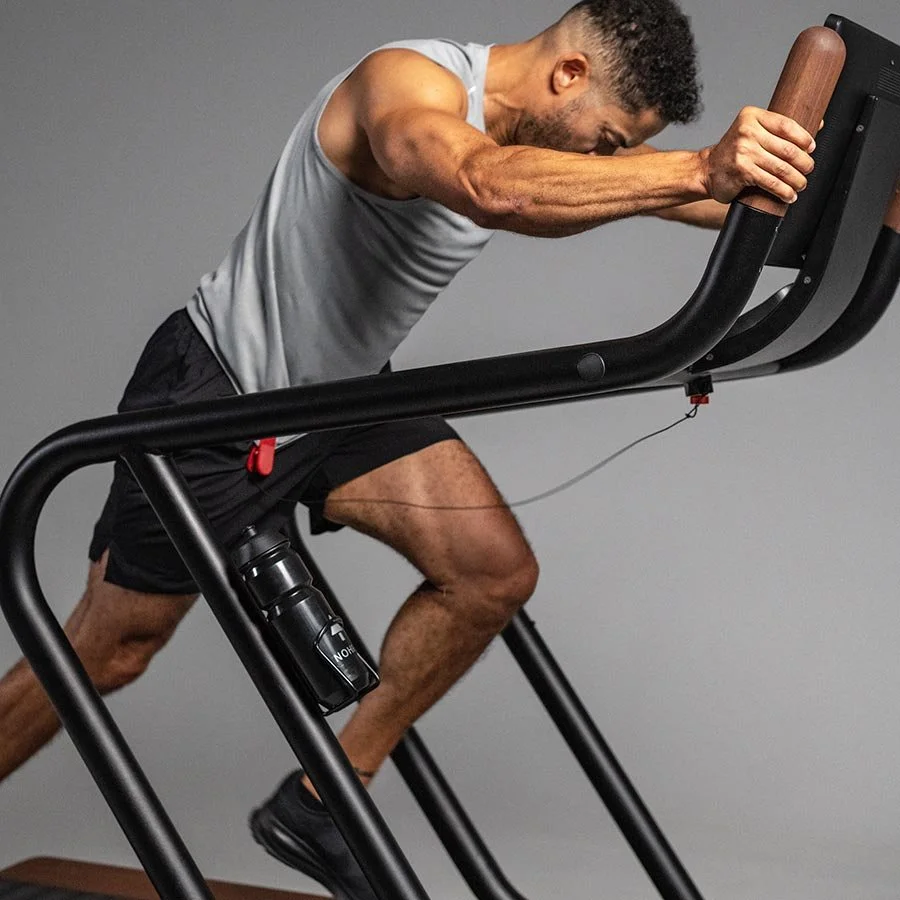
This treadmill does more than move you forward. It supports reverse running, push-pull resistance, and even decline training. In one machine, you get treadmill, sled trainer, and functional-movement tool. For high-end home gyms, that versatility is rare.
Quiet Power & Smooth Drive
A long-life brushless DC motor and servo drive system deliver a smooth, quiet experience — a big deal when you care as much about ambiance as output. It feels premium underfoot: steady, responsive, and silky.
Where We’re Still Gathering Data
After our first sessions, there were no red flags — just a few open questions that need longer testing:
Long-run comfort & noise: How it performs over 20- to 30-minute sessions and high-incline sprints.
Durability of slats and belt: How the materials wear over months of use.
Incline reliability: Smoothness of transitions under load and the motor’s long-term stability.
User adaptation: How different body types and gaits respond to the slat feel and push/pull modes.
Maintenance and support: Availability of parts and ease of service over time.
These aren’t concerns so much as due diligence for a machine this advanced.
Who the Citius Is (and Isn’t) For Ideal for:
Luxury home gyms or boutique studios where design and performance coexist.
Users who value aesthetics as much as training depth.
Athletes who want incline, sprints, and functional push/pull workouts in one machine.
Less ideal for:
Those on a tight budget — the Citius starts around $22,999.00 to $25,499.00 depending on finish.
People who just need basic cardio equipment.
Commercial gyms expecting heavy, indiscriminate traffic until long-term durability is proven.
My Verdict — The Future of Luxury Running
The NOHRD Citius is rare: a treadmill that blends wood-shop craftsmanship with elite training capability. It doesn’t compromise, and it doesn’t hide its design heritage. This treadmill is on my list of new equipment to get for myself.
It’s a machine built for the modern home gym — beautiful, quiet, and technically brilliant.
Yes, it’s an investment. Yes, there’s more to learn about its long-term durability. But from our first runs, the Citius feels like the first treadmill in years that truly moves the category forward.
If you’re building a gym where design and performance must coexist, the Citius is the benchmark.
In short: The NOHRD Citius Treadmill doesn’t just run — it reimagines running.