
Iron House Design · 2027 Guide
The Complete Guide to Designing a Luxury Home Gym or Wellness Space in 2027
By Tanya Ryno · Founder & Creative Director
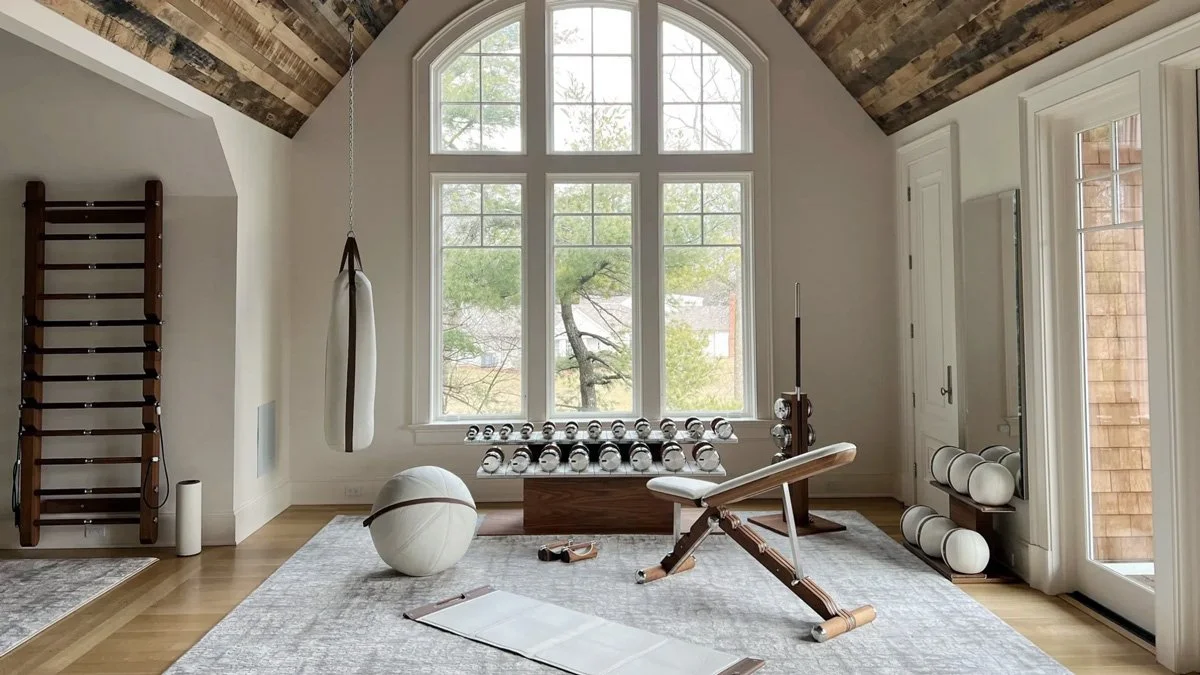
At Iron House, we don’t “build home gyms.” We design daily rituals — private, architectural sanctuaries where performance, longevity, and aesthetic integrity all work together.
A thoughtfully designed home gym should work for the people who use it, complement the architecture, and feel like a natural part of the home. Whether the project is a compact exercise room, a dedicated Pilates studio, or a multiroom fitness and wellness suite, successful design begins by understanding the way its owners want to live.
In this guide, we share the principles we use at Iron House Design, drawing on more than 15 years of experience creating residential fitness spaces. These are considerations rather than rigid rules: the right choices depend on the room, the equipment, and—above all—the individual.
Why the Home Gym Has Become an Essential Room
A dedicated fitness space offers something that can be difficult to find elsewhere: the convenience of exercising on your own schedule, with equipment selected specifically for you. There is no commute, no waiting for a machine, and no need to adapt your routine to someone else’s environment.
Increasingly, homeowners are also incorporating Pilates, stretching, recovery, massage, and other wellness activities into their homes. In some residences these functions share a room; in others they are becoming separate spaces or full wellness suites.
But putting a treadmill in a spare bedroom does not automatically create a gym people enjoy using. How the equipment fits, where movement happens, how the room feels, and how everyday details work together can all influence whether the room becomes part of a routine. A well-designed space should feel inviting rather than obligatory.
What Luxury Really Means in a Home Gym
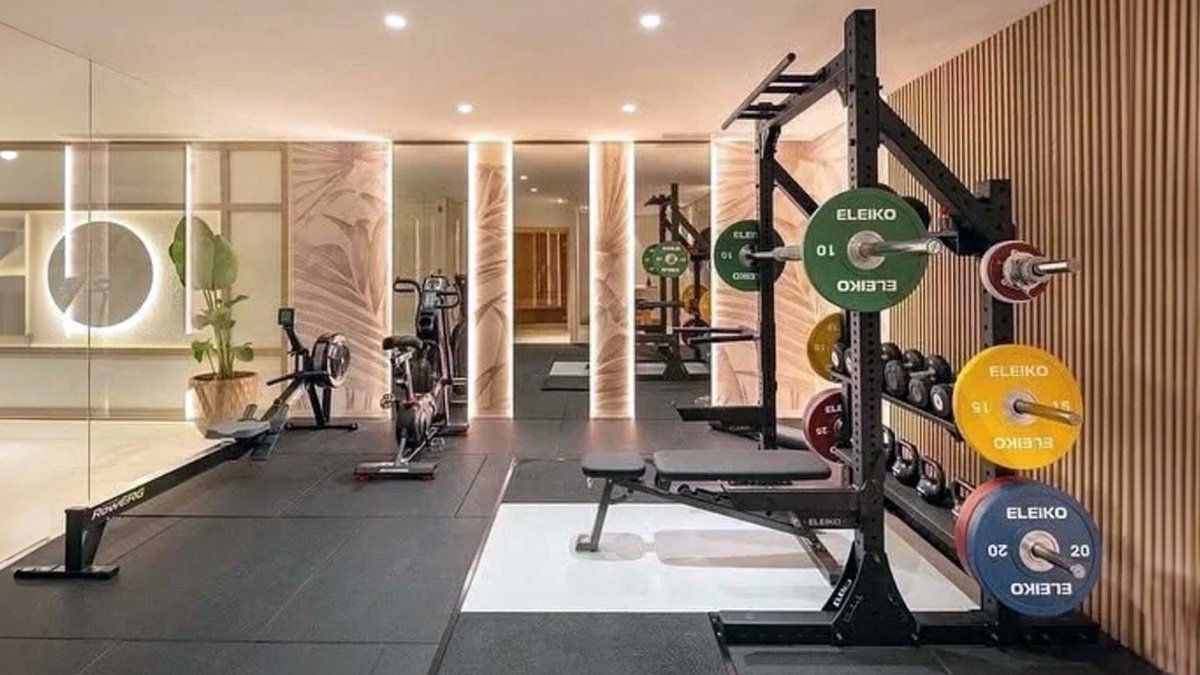
Luxury is not a particular square footage, an equipment price tag, or a list of required amenities. It is the experience of entering a room that has been considered as carefully as any other part of the home.
For some homeowners that means handcrafted exercise equipment, custom millwork, and sophisticated lighting. For others it means a smaller, calm, highly functional room that makes daily movement easy. A gym can be rich and traditional, clean and contemporary, intensely athletic, or serene and wellness-oriented.
Our guiding principles are architectural integration, individual equipment selection, intentional space planning, materials suited to real use, comfortable lighting and ventilation, and attention to long-term ownership. Aesthetics and performance do not have to compete. The objective is to make them work together.
How Much Space Do You Actually Need?
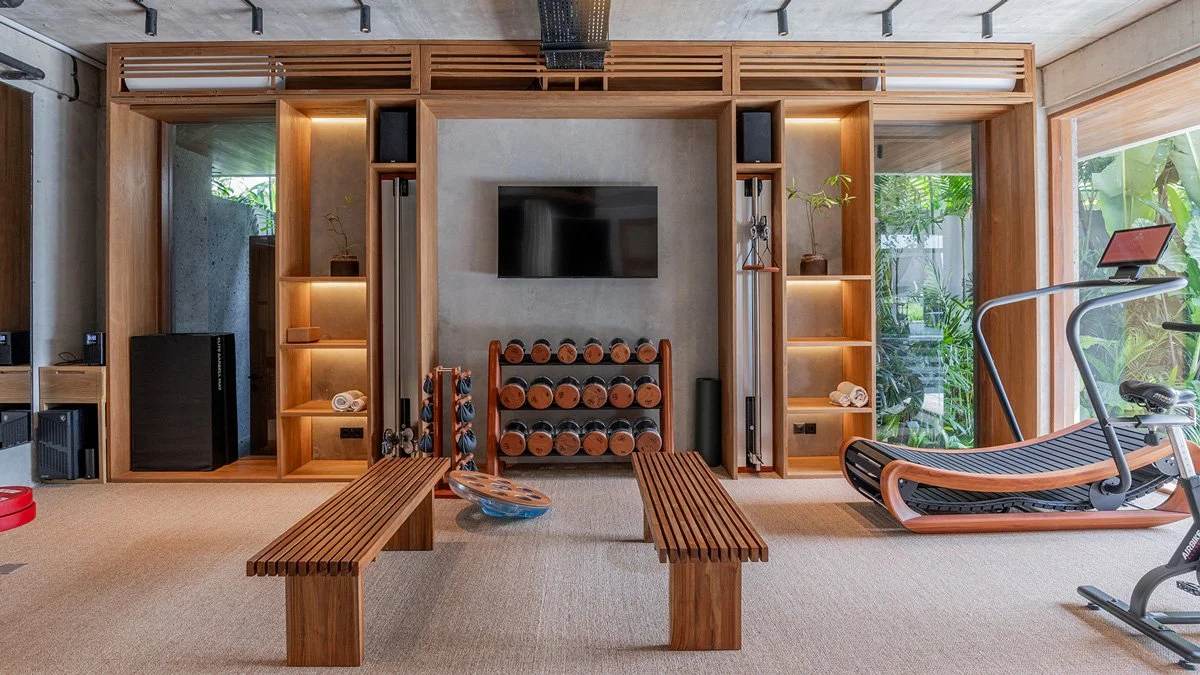
There is no universally correct room size for a home gym. A relatively compact room can support a satisfying routine with thoughtfully chosen equipment. A larger space can accommodate multiple users, separate training disciplines, and dedicated wellness features. Neither is automatically more successful.
Start with the activities: cardio, free weights, Pilates, strength machines, floor work, or some combination. Then determine the dimensions of the actual equipment and the space required for the person using it. Equipment footprints alone do not show where a bench travels, where plates are loaded, where a person stands or stretches, or how someone safely enters and exits a machine.
Ceiling height is equally important. A treadmill elevates the user; pull-ups and overhead lifts require headroom; and some Pilates exercises extend well above the machine. An eight-foot ceiling can work well for many gyms but will limit some activities. Rather than rely on one-size-fits-all clearance charts, we confirm the requirements of the selected models and intended movements.
Garages and basements can be excellent locations, although temperature, moisture, lighting, acoustics, and access should be assessed. Upstairs and condominium gyms warrant particular attention to structural loading and sound transmission. Even a small room deserves deliberate planning.
Zoning & Flow — Designing a Gym That Works
A beautiful gym begins with thoughtful space planning. While defined strength, cardio, Pilates, and recovery areas can be useful, especially in larger rooms, every activity does not need its own separate zone. At Iron House, zoning is a planning tool, not a formula.
Intentional Open Floor Space
One of the most valuable parts of a gym is often the space deliberately left empty. Even when clients do not expect to need it, we generally preserve usable floor area for stretching, mobility, bodyweight exercise, and movements that require no dedicated machine.
That space does not have to sit in the center. Placing all the equipment against the walls and leaving a blank middle can work, but it is not automatically the most functional or interesting layout. We look at the entire room. Equipment may be better placed centrally, while open floor space may make more sense near windows, beside a reformer, or in a quiet portion of the room. The goal is for that empty area to look and feel intentional, not like whatever happened to remain after everything else was installed.
Strength, Cardio, Pilates & Storage
Strength layouts must account for access around racks, loading plates, positioning adjustable benches, cables and attachments, and safe exercise movement. Freestanding equipment does not necessarily need a structural wall, whereas wall-mounted systems and certain racks require specific anchoring or support.
Cardio machines should be located according to usable clearances, electrical access, views, personal preferences, and entertainment sightlines—not simply lined up because they belong to the same category. A television that works for the treadmill may be poorly positioned for someone stretching on the floor.
Pilates reformers, Cadillacs, and related equipment need more than their physical footprint. Space alongside the machine and overhead must accommodate actual exercises and accessories.
Storage can be integrated into racks, custom cabinetry, architectural shelving, or freestanding furniture. We also consider towels, mats, water bottles, and the simple need for a place to set down a phone. For multi-user households, circulation and overlapping routines become especially important. Good planning is not about fitting in the maximum amount of equipment; it is about making every part of the space work.
Choosing the Right Equipment — For Your Life, Not a Trend
The best equipment is not necessarily the most expensive or the most widely recommended. We consider the client’s goals, experience, preferred activities, physical needs, available space, and likelihood of genuinely enjoying the equipment. How the machine feels to use matters as much as what its brochure promises.
Commercial vs. Residential Equipment
Most of the equipment Iron House specifies is commercial-grade or from premium manufacturers that serve commercial environments. That reflects the quality, engineering, craftsmanship, appearance, and ownership experience our clients often seek. But commercial equipment is absolutely not a requirement for an excellent home gym.
A well-made residential treadmill may be more than sufficient for someone who walks a few times a week. A commercial machine may make sense for a dedicated runner or someone who prefers its construction and features. Commercial systems can also be larger, heavier, and more complex to install. Luxury and commercial-rated are not interchangeable labels, and price alone does not establish suitability.
Aesthetics Are a Legitimate Part of the Decision
A five-pound hex dumbbell and a beautifully handcrafted five-pound PENT dumbbell provide essentially the same amount of resistance. Their materials, tactile qualities, finishes, and visual character are another matter.
Clients frequently select equipment partly because they love how it looks. The clean profile of an Eleiko rack or the sculptural presence of Technogym’s Personal line may be particularly appealing. Racks differ in construction, features, and capacities, but once the functional needs are met, appearance can reasonably be the deciding factor. In a residence, fitness equipment is part of the interior.
Multifunctional Equipment Can Be an Excellent Choice
Multifunctional equipment should not be dismissed as a category. Some commercial systems are very large, but compact solutions can provide an impressive range of training options in a smaller home gym.
Tonal is one example of a wall-mounted digital resistance system that can preserve floor area, provided appropriate structural preparation, power, and workout clearance are available. Technogym Unica offers a different approach: a freestanding, integrated strength system for people who prefer traditional resistance training. Neither replaces every possible machine, but both can be excellent choices for the right person and space. We also review app, connectivity, and subscription requirements where relevant.
Manufacturers We Work With
Iron House works across a wide network of brands rather than limiting an entire project to one manufacturer. Depending on the client and project, equipment may come from Technogym, PENT, NOHRD, Eleiko, Matrix, Watson, HOIST, KENKO, and other premium suppliers. Specialized equipment may come from Merrithew, Jacobs Ladder, Power Plate, Concept2, MUOV, and additional manufacturers.
These are examples, not an exhaustive catalog or a claim that one brand is best for every person. Mixing manufacturers often produces a better result.
To explore a curated selection of the fitness equipment we offer, visit our Luxury Fitness Equipment Store. The online collection represents only part of the equipment we can source for a project.
Our work also draws on an extensive network of specialists in flooring, lighting, cabinetry, wall finishes, and other architectural details. You can explore these resources on our Design Partners & Sourcing Resources page, which we update as our partnerships evolve.
Common Equipment-Selection Mistakes
We encourage homeowners to avoid purchasing equipment before understanding the room; choosing a product only because it is popular; assuming more machines create a better gym; ignoring how an adjustable bench or accessory moves through the space; and overlooking delivery access, electrical provisions, ongoing subscriptions, warranties, parts availability, and servicing.
We do not automatically reject all-in-one equipment, folding machines, or lower-cost products. The question is always whether the particular model is reliable, appropriate, and enjoyable for the intended user.
Design & Aesthetics — Making the Gym Beautiful
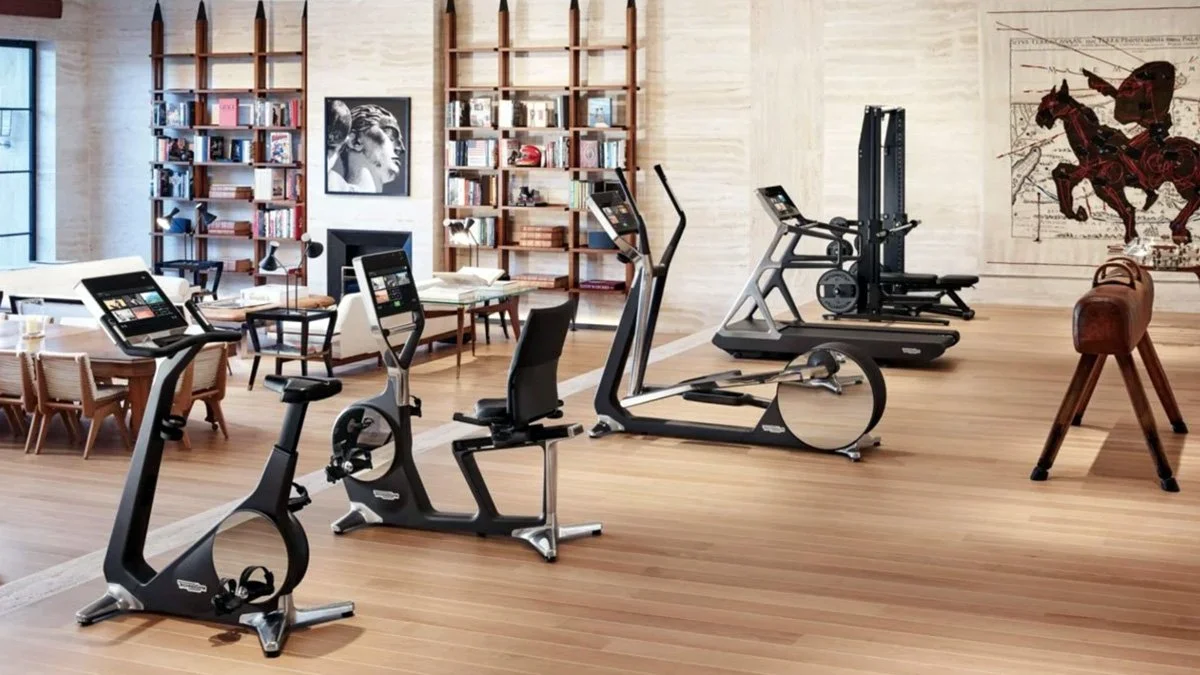
A home gym should feel designed into the home, not dropped into it. We see four broad design directions—modern minimalist, industrial strength, spa sanctuary, and technology-forward—but most real projects borrow from several styles. A traditional, richly detailed room can be just as successful as a restrained contemporary one.
Lighting That Brings the Room to Life
Lighting is one of the most transformative elements of a gym and one of the decisions most influenced by budget. A straightforward recessed lighting plan can be entirely successful when fixtures are positioned with exercise in mind. A light directly above someone lying on a bench or reformer, for example, may create uncomfortable glare.
In more elaborate projects we often include perimeter cove lighting, backlit mirrors, specialty illumination within shelving and built-ins, and large statement fixtures when clearance and movement permit. Some clients invest in controls from manufacturers such as Lutron for scene changes throughout the day. The goal is not technological complexity for its own sake, but a room that supports different activities and feels beautiful in every lighting condition.
Mirrors Are Personal
Some clients want no mirrors. Others want one full wall of floor-to-ceiling mirrors for visual feedback. Many Iron House projects combine one broad mirrored wall with framed mirrors—sometimes backlit—placed behind selected equipment.
Too many opposing full-height mirrored walls can produce an endless-reflection or “hall of mirrors” effect. We consider the visual composition as carefully as functionality, alongside appropriate glass specifications and safe installation.
Architectural Details, Acoustics & Comfort
Wood, plaster, decorative wallcoverings, stone, tailored millwork, art, custom furnishings, and display shelving allow the gym to reflect the home and its owners. Storage can be beautifully integrated without always being hidden.
Equipment sound and structural vibration need separate consideration: an acoustic wall panel can help reverberation without necessarily isolating a treadmill from the room below. Ventilation, humidity, cooling, and air movement also matter, particularly in basements and wet wellness spaces. Not every gym needs elaborate acoustic or mechanical interventions, but each should be considered.
See These Design Principles in Practice
Every home gym and wellness space presents a different combination of architectural opportunities, personal preferences, and functional requirements. For inspiration, explore our Home Gym & Wellness Design Gallery, featuring completed Iron House Design projects. These spaces illustrate how equipment, materials, lighting, and thoughtful planning can come together in very different ways.
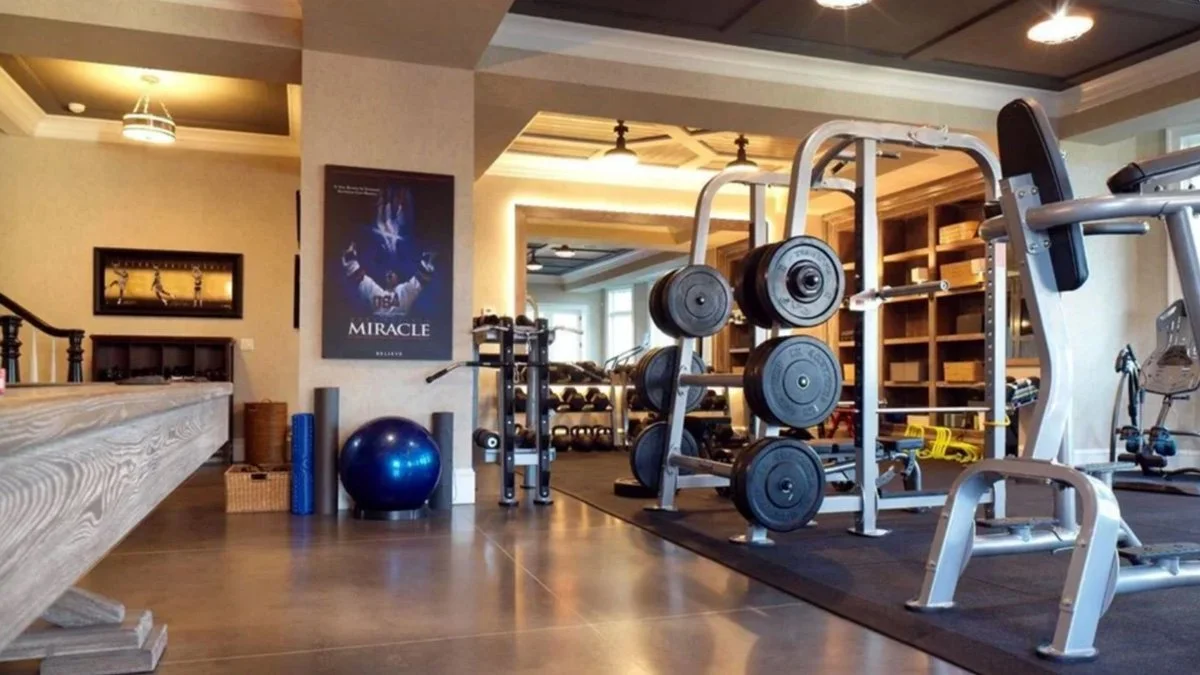
Flooring — The Foundation of a Well-Designed Home Gym
Flooring influences comfort, durability, acoustics, safety, and the appearance of the room. Rubber remains one of the best all-around choices for intense training, dropped weights, and demanding use. But after more than 15 years designing residential gyms, we know that not every room containing exercise equipment needs traditional rubber.
Many clients do not train like competitive athletes. They use cardio equipment, practice Pilates, work with controlled resistance, and do not routinely drop heavy weights. In these circumstances, another carefully selected material may suit both the intended use and the architecture.
Performance Rubber
Rubber remains our preferred starting point where lifting impact, high-volume exercise, and robust floor protection matter. It comes in rolls, tiles, and specialized assemblies with different thicknesses, densities, and finishes. Not all rubber products offer equal impact or acoustic performance, and the correct specification depends on what the room needs.
Woven Vinyl and Resilient Backing
Woven vinyl can bring sophisticated texture and a residential appearance to a gym. Many woven vinyl products, however, are too thin on their own to deliver the cushioning or protection people expect from gym rubber. Where appropriate and manufacturer-approved, we may add a separate resilient or rubber underlayment beneath the finished surface. The complete assembly—not just the decorative top layer—must be evaluated.
Hardwood and LVT/LVP
Hardwood is a frequent request, and we use it regularly in gyms dedicated to controlled exercise, general fitness, Pilates, and lighter resistance work. One often-overlooked concern is the adjustable bench: it gets repositioned repeatedly, and dragging its feet or frame may eventually scratch wood.
Commercial-quality luxury vinyl tile or plank can offer a wood look with different wear characteristics and may be more forgiving of regular equipment movement, though it is not scratch-proof. Product-specific wear layers, indentation resistance, rolling-load limits, and installation instructions matter.
Cork, Leather, Custom Rugs and Carpet
Cork offers softness, natural warmth, and an inviting feel for meditation, yoga, Pilates, and other low-impact activities. It is not generally the best surface beneath heavy equipment or concentrated loads. Specialty leather flooring can create an exceptionally refined wellness environment and may be more durable than some cork products in certain applications, but its construction and care requirements must guide use.
Custom rugs can be a beautiful alternative to conventional exercise mats, especially in hardwood rooms where we want to add character and define an area for stretching or lighter floor work. We have also incorporated carpeting into certain residential and condominium gyms. Rug stability, pile, backing, cleaning, and equipment compatibility are essential. Carpet is not a universal solution for sound isolation, and building requirements should be confirmed.
Sprung Sports Hardwood and Polished Concrete
Purpose-built sports hardwood, including sprung systems from Junckers, differs from ordinary residential wood flooring. Certain systems offer controlled shock absorption and support dynamic movement, though dropped weights and concentrated loads may still require additional protection.
Polished concrete is a compelling architectural choice for contemporary gyms and garage-style spaces. It is durable but hard underfoot, provides little inherent cushioning, and may require localized mats or protective zones. Surface finish, moisture conditions, and traction should all be evaluated.
Specialized Surfaces and What Lies Beneath
Turf can be appropriate for sleds or dedicated functional activities. Wet areas may call for properly designed tile or other moisture-resistant systems with suitable slip resistance and waterproofing.
The subfloor matters as much as the finished surface. Moisture, floor flatness, acoustic assemblies, compatible adhesives and underlayments, transitions, and equipment loads can influence performance. Cushioning underfoot should not be confused with acoustic isolation between floors.
There is no one surface that belongs in every home gym. We select flooring for the people, training, equipment, and architecture of the particular space. Explore our flooring materials and examples at iron-house.co/luxury-home-gym-flooring.
Explore our home gym and wellness flooring collection for material inspiration.
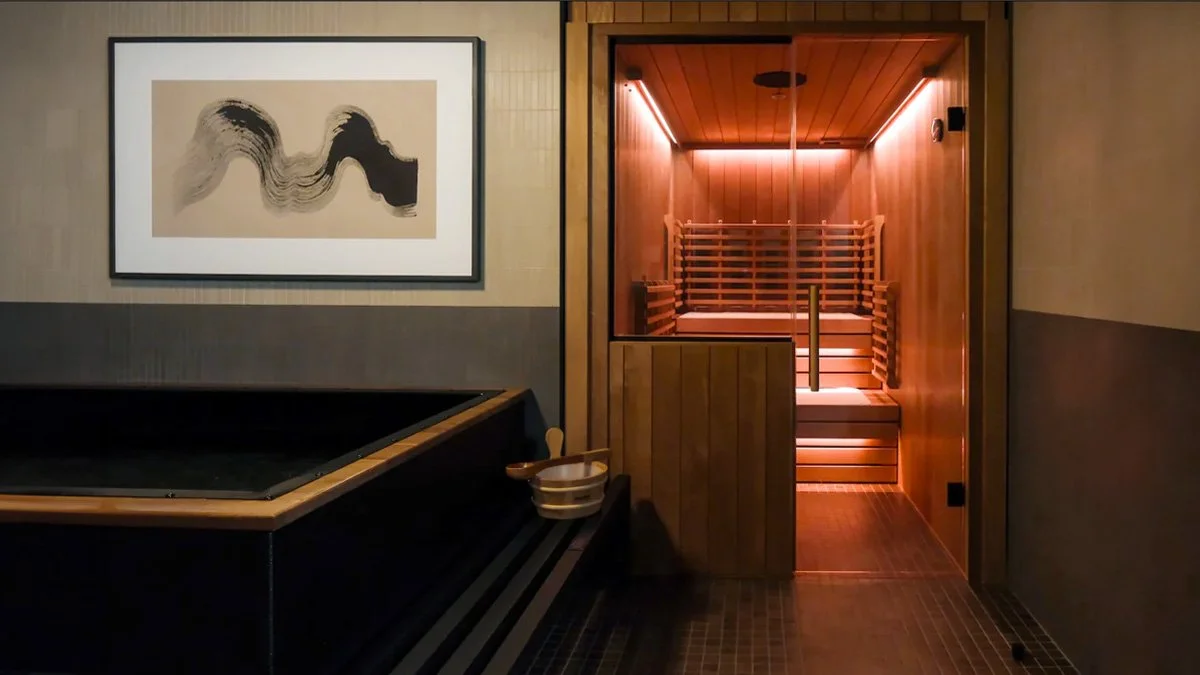
Wellness & Recovery — Beyond the Gym
Saunas and cold plunges initially began appearing inside the gyms we designed. Increasingly, we are seeing those features evolve into separate rooms and full wellness suites. A home gym may connect to a dedicated massage room, heat-and-cold area, quiet recovery lounge, or a collection of spaces designed to feel distinct from the workout environment.
Not every wellness experience needs specialized equipment. Sometimes a room designed for quiet, stretching, massage, or relaxation is exactly what someone wants.
Saunas, Steam Rooms and Cold Plunges
Traditional and infrared saunas offer different heat experiences, and may be prefabricated or custom designed. We consider the installation, heater requirements, ventilation, clearances, surrounding materials, and future service access. Steam rooms are more specialized wet environments requiring coordinated waterproofing, vapor management, drainage, and mechanical design.
Cold plunges range from self-contained units to architectural installations. They deserve careful attention to filled weight, access, power, water management, cleaning, slip resistance, and delivery. A product may fit on the drawing but fail to navigate the stairs or hallway. For contrast therapy, the relationship between heat and cold features, safe movement between them, and places to rest are part of the design. Extreme-temperature exposure is not suitable for everyone; health considerations should be discussed with a qualified clinician where relevant.
Massage Rooms and Recovery Spaces
Massage rooms are an important part of our wellness work. A successful room is about more than fitting in a treatment table. Privacy, circulation around the table, lighting, acoustics, temperature, storage, and an inviting atmosphere all matter. Some massage rooms stand alone; others form part of larger suites with saunas, plunges, stretching areas, or relaxation lounges.
Compression systems, reclining furniture, and dedicated recovery or mobility areas may also fit naturally into these spaces. The most luxurious feature may simply be a quiet room where someone wants to spend time.
Red Light, Salt Rooms and Emerging Technologies
Red light therapy devices, salt rooms, and other specialty technologies are attracting growing interest. Their equipment, electrical, clearance, maintenance, and environmental requirements vary considerably. Evidence for specific health outcomes differs by technology and application, and we avoid broad medical promises. A halotherapy system, for instance, differs from a decorative salt environment. More specialized devices may introduce additional regulatory or clinical considerations.
Our role is to design and coordinate the space around the client’s chosen experiences—not to make medical claims about treatments. Thoughtful wellness design integrates atmosphere, privacy, materials, practical systems, and appropriate professional advice.
Construction & Technical Planning — The Details That Matter Early
Many clients now involve Iron House before construction decisions are finalized, which is exactly when our input can be most valuable. Equipment and interior design should be developed together rather than separately. A wall ladder might need the same uninterrupted wall an interior designer intends for decorative paneling; a reformer may fit neatly on plan but have no room for the exercises performed beside it. These are not failures of either profession. They are coordination challenges best resolved early.
Ceiling Height and Real Clearances
Review the usable height for the user and movement—not only the height of the equipment. Confirm model-specific requirements for treadmill clearance, pull-ups, overhead lifts, and Pilates activities. Provide safe access and circulation around every machine. Generic space rules are useful for early sketches, but final layouts should follow equipment specifications and actual activities.
Electrical, Data and Technology
Treadmills, connected strength systems, saunas, plunges, lighting controls, and other equipment can have very different electrical requirements. We identify exact models and communicate manufacturer specifications to the licensed electrician. We also plan outlet locations, low-voltage wiring, Wi-Fi and AV needs, and ways to keep cables visually discreet. Not every machine needs a dedicated circuit; the correct installation depends on the model and applicable codes.
Structural Support and Floor Loads
Wall-mounted equipment, exercise ladders, suspension anchors, heavy bags, and certain racks may need blocking, approved anchoring, or engineered support. Dynamic loads on ceiling attachments require particular attention. Upper-level gyms, heavy strength systems, and water-filled equipment may warrant professional evaluation of concentrated floor loads. Flooring protection does not substitute for structural capacity.
Environment, Acoustics and Water Management
Cooling, humidity control, ventilation, and airflow should reflect how many people use the room and the activities performed there. Noise and impact vibration may require different solutions. Wet wellness installations introduce drainage, waterproofing, vapor management, cleaning, and service needs that should be resolved with qualified professionals. These requirements differ substantially between a simple exercise room and a fully integrated spa.
Delivery Routes and Installation
Before ordering a substantial machine or cold plunge, check every doorway, stair, elevator, corridor, landing, and access restriction along the delivery route. Some products can be disassembled; others cannot. Specialized rigging may be necessary and should never be improvised. Delivery feasibility belongs in design planning, not as a last-minute discovery.
Collaboration Makes the Design Better
Architects and interior designers bring expertise in architecture, finishes, and the overall home. Iron House contributes specialized knowledge of fitness equipment, clearances, functional exercise layouts, wall requirements, and wellness installations. When the two disciplines collaborate early, neither aesthetic intentions nor the homeowner’s equipment wishes need to be unnecessarily sacrificed. Our goal is to elevate the design team’s vision while helping the client get the space they actually want.
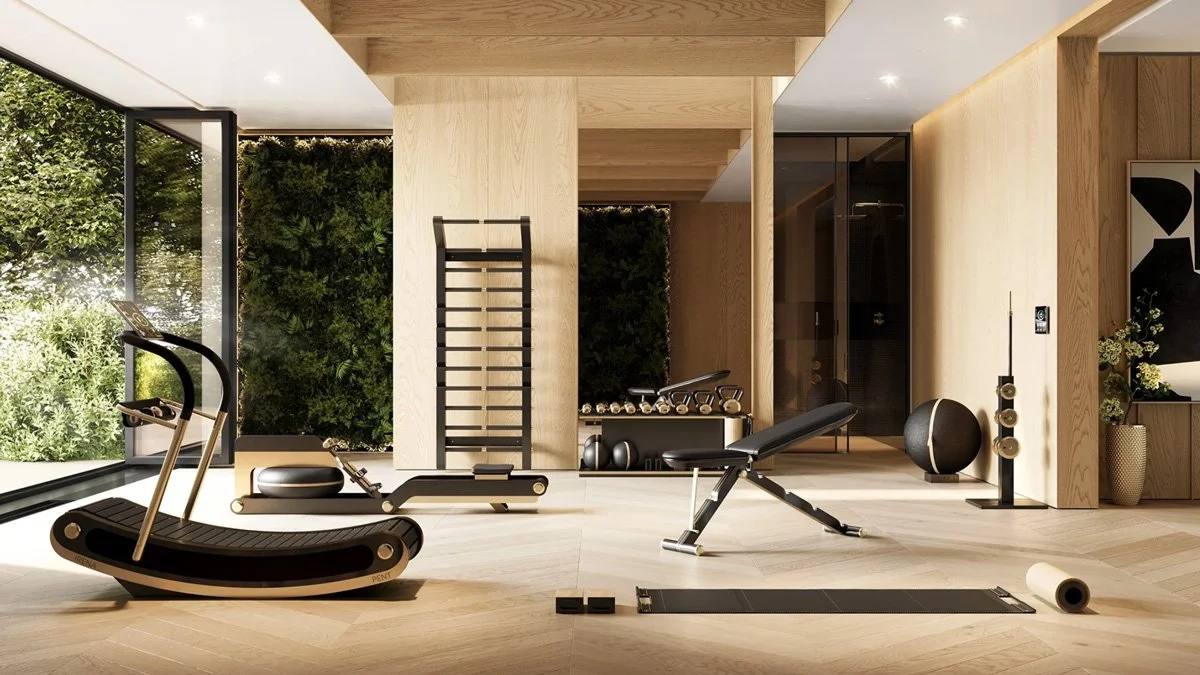
Understanding the Investment — Without a Price Formula
There is no meaningful universal price for a luxury home gym. One beautifully crafted treadmill can represent a substantial investment; another homeowner may outfit a whole gym for a similar amount. Room size alone does not determine cost, and equipment costs are not the same as the total project budget.
Important budget categories include equipment, flooring, mirrors, lighting, architectural finishes, cabinetry, electrical and mechanical work, wet-area construction, delivery, professional installation, and design services. Some projects need only a few of these elements; others need nearly all.
We encourage clients to prioritize what matters most to them and to spend early on functional decisions that will be expensive to change later. We do not publish fixed investment tiers here, because they can misrepresent the variety of projects and equipment we handle. Clear scopes and realistic estimates are more useful than a generic number.
Project Timeline — From Design to Installation
Every project follows its own schedule, influenced by the design process, client decisions, construction work, manufacturing, shipping, and installation. Our initial design presentation is typically developed in approximately two weeks once the necessary information is available, with the timeline varying according to project scope.
After the layout and equipment direction are established, we refine selections and coordinate relevant specifications with the project team. Some machines are available from existing inventory; others are made to order overseas. Custom equipment and finishes can require many months, and in certain cases lead times can approach a year. International freight, customs, domestic delivery, and installer schedules can add further variables.
For this reason, beginning early is often more valuable than trying to force the gym into a fixed delivery calendar. Equipment and construction schedules should be coordinated as closely as possible, while allowing for changes beyond any one party’s control.
Working With Iron House Design — Our Process
Iron House Design is intentionally a small, family-owned company. When we take on a project, our clients work directly with Tanya and Jim Ryno. Tanya brings an art and design background to the layout, visual composition, and architectural integration; Jim contributes more than 25 years of professional fitness experience and extensive equipment knowledge. Together, we consider how a room should look and feel—and how it needs to function.
Phase 1 — Discovery and Initial Design
We begin with a conversation about training habits, personal preferences, desired equipment, aesthetics, and how the room will be used. With plans, verified dimensions, and photographs, we develop an initial layout and direction, which may include 2D plans, 3D visualizations, product suggestions, and preliminary finish ideas depending on the project.
Phase 2 — Refinement and Project-Team Coordination
We refine equipment, layout, finishes, and practical requirements while collaborating with architects, interior designers, contractors, and specialty professionals where relevant. This is when the relationship between aesthetic features and necessary equipment clearances becomes especially important.
Phase 3 — Equipment Procurement and Logistics
Clients may purchase equipment through Iron House, though design services are not necessarily contingent on doing so. For equipment purchased through us, we coordinate ordering, communicate lead times, and help manage shipping and delivery arrangements within our scope. We select across brands rather than insisting on one manufacturer for every item.
Phase 4 — Installation Coordination
As the site and equipment become ready, we coordinate with the relevant delivery and professional installation teams. We consider approved placements, access, handling requirements, and the relationship of equipment to completed finishes. Different projects and products require different levels of involvement.
Phase 5 — Ongoing Warranty and Service Assistance
For equipment purchased through Iron House, clients can contact us when a warranty or manufacturer-related service issue arises. They do not need to begin by navigating a generic customer service line or hunting for an equipment serial number. We retain their purchase information and use our manufacturer relationships to reach the people best positioned to assist with troubleshooting, warranty claims, replacement parts, and service coordination.
Repair outcomes, coverage, and timing remain subject to manufacturers’ terms and service availability, but our clients have someone familiar with the project helping them navigate the process. Our relationship does not end when the machine is installed.
A Personal, Collaborative Experience
Some projects begin with a full architectural team; others begin with a homeowner, a room, and a list of ideas. We enjoy both. We do not aim to replace an architect or interior designer, but to contribute a specialist perspective that improves the end result. When you hire Iron House Design, you work with us—and we take that responsibility personally.
A Final Thought
A successful home gym is not defined by a predetermined floor plan, a required flooring material, a brand name, or a particular price. It is a room shaped around the people who will use it—how they move, what they love, and how the space belongs within the larger home.
At Iron House Design, we bring together design, equipment knowledge, practical planning, and long-term service to make that experience personal from the first conversation onward. The best home gym is not simply one that looks extraordinary. It is one that feels like it was designed specifically for you.