
There’s a moment — right before a great massage begins — when your shoulders drop, your breath slows, and your body quietly realizes it’s safe. That moment doesn’t happen by accident. It’s designed.
A truly luxurious home massage room isn’t about copying a spa. It’s about creating a private sanctuary that supports restoration, longevity, and ritual — a space that understands the nervous system as much as it understands aesthetics.
As more homeowners design with wellness and longevity in mind, massage rooms are no longer indulgences. They’re infrastructure. Here’s how to create a luxury home massage room that feels intentional, elevated, and deeply restorative — without feeling clinical or overdone.
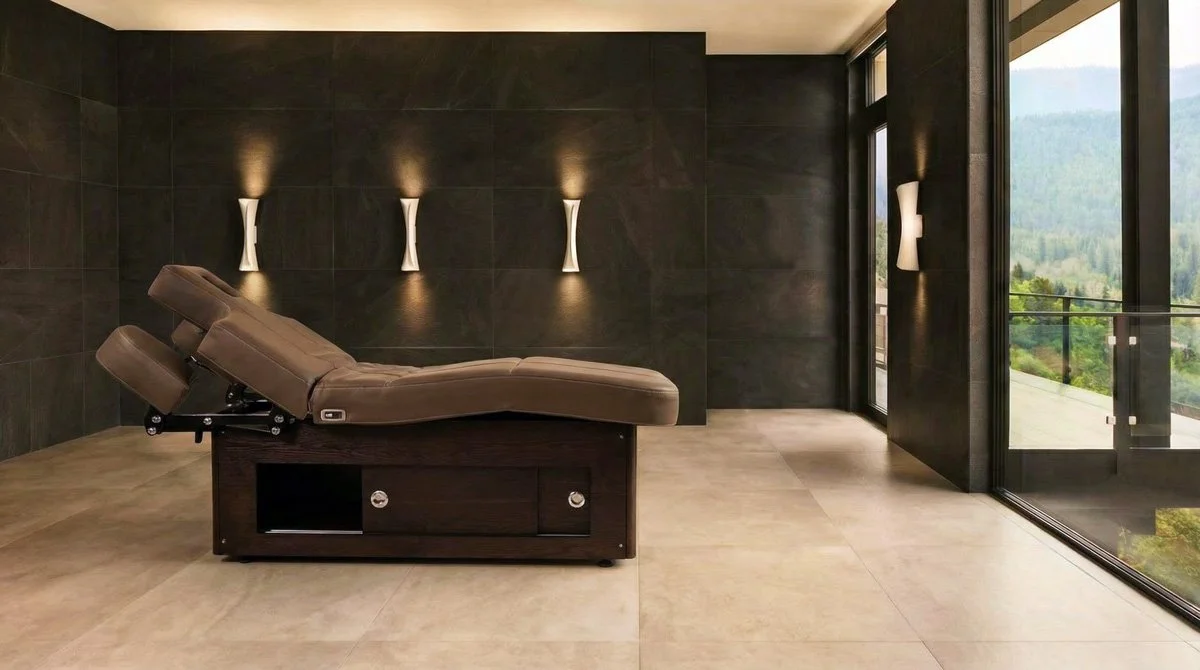
Iron House Raman Massage Table
Lighting: Soft, Layered, Intentional
Lighting is the emotional backbone of a massage room.
Overhead lighting alone will never feel luxurious. Instead, think in layers — light that can be adjusted as the session unfolds.
Ambient light creates warmth and atmosphere (consider smart LED strips for customizable glow)
Task lighting supports function without drawing attention
Accent lighting adds depth and intimacy
Warm tones matter here. Cooler light disrupts relaxation and circadian rhythms. This is a space designed to slow time, not energize it.
And yes — dimmers everywhere. Smart bulbs like Philips Hue make this easy in luxury home massage room designs.
Materials That Speak Quietly
Luxury doesn’t shout. It whispers.
Choose materials that feel good to the touch and easy on the eyes for your wellness-focused massage room at home:
Matte wall finishes that absorb light
Natural wood floors, sustainable bamboo, or soft luxury vinyl plank (LVP) for warmth underfoot
Upholstery that breathes — linen blends, soft performance fabrics
Stone or wood accents that ground the space
Avoid high-gloss surfaces and anything that feels overly “spa retail.” The goal is serenity, not stimulation.
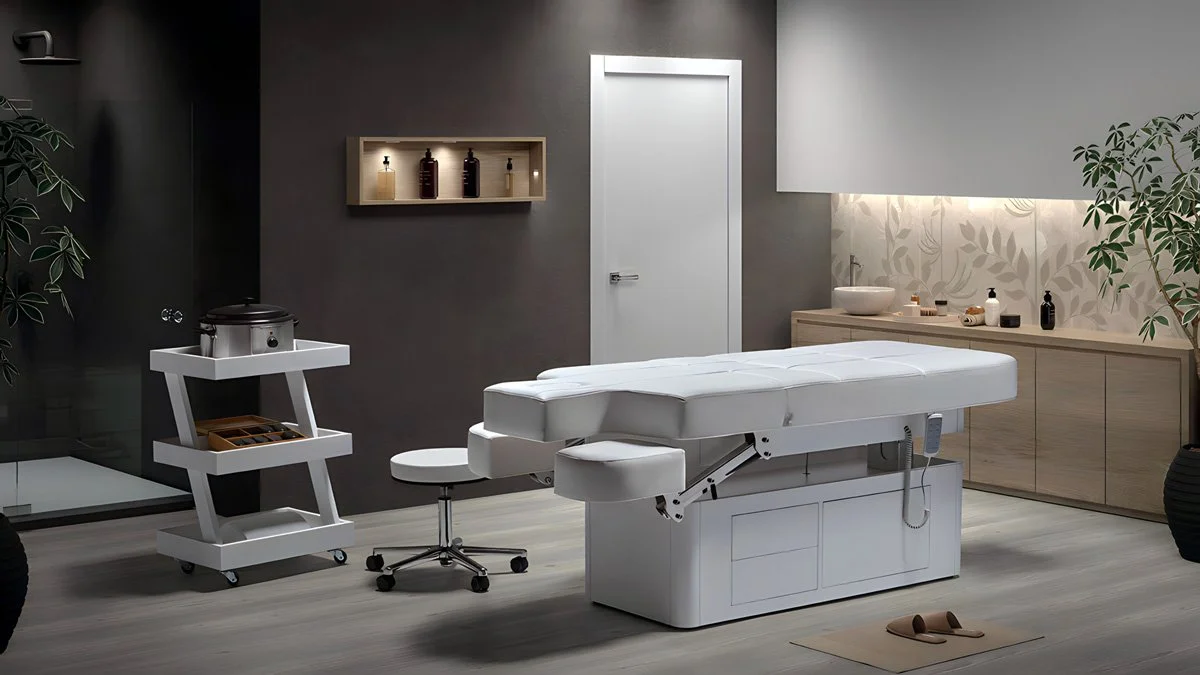
Silence Is a Feature
Sound is one of the most overlooked elements of home wellness design.
A beautiful room that echoes is still stressful.
Incorporate acoustic solutions for home massage rooms:
Soft textiles
Upholstered furniture
Drapery or acoustic panels disguised as art
Then layer in sound intentionally — white noise machines, nature tracks via apps like Calm, or low ambient music. Silence should feel supportive, not hollow.
Temperature, Air & Physical Comfort
Massage is physical — the room should respect that.
Separate temperature control (like a mini-split HVAC system) keeps the body comfortable throughout treatment
Heated blankets and table warmers elevate the experience immediately
Proper ventilation and air purifiers ensure clean air quality
Luxury is often felt before it’s noticed.
Storage That Disappears
Nothing disrupts relaxation like clutter.
Design hidden storage ideas for your luxury home spa:
Built-ins with soft-close hardware
Concealed niches for oils and tools
Thoughtful placement so nothing feels improvised
Every item should have a home — and nothing should be visible without intention.
Engage the Senses, Gently
A great massage room engages all five senses — but never overwhelms.
Scent: subtle, optional diffusers (never overpowering)
Sound: soft, consistent, grounding
Touch: layered textiles, warm surfaces
Sight: calm palettes, natural forms
Temperature: steady and comforting
This is where longevity design shines. You’re not chasing trends — you’re supporting the nervous system and vagus nerve stimulation for better stress management.
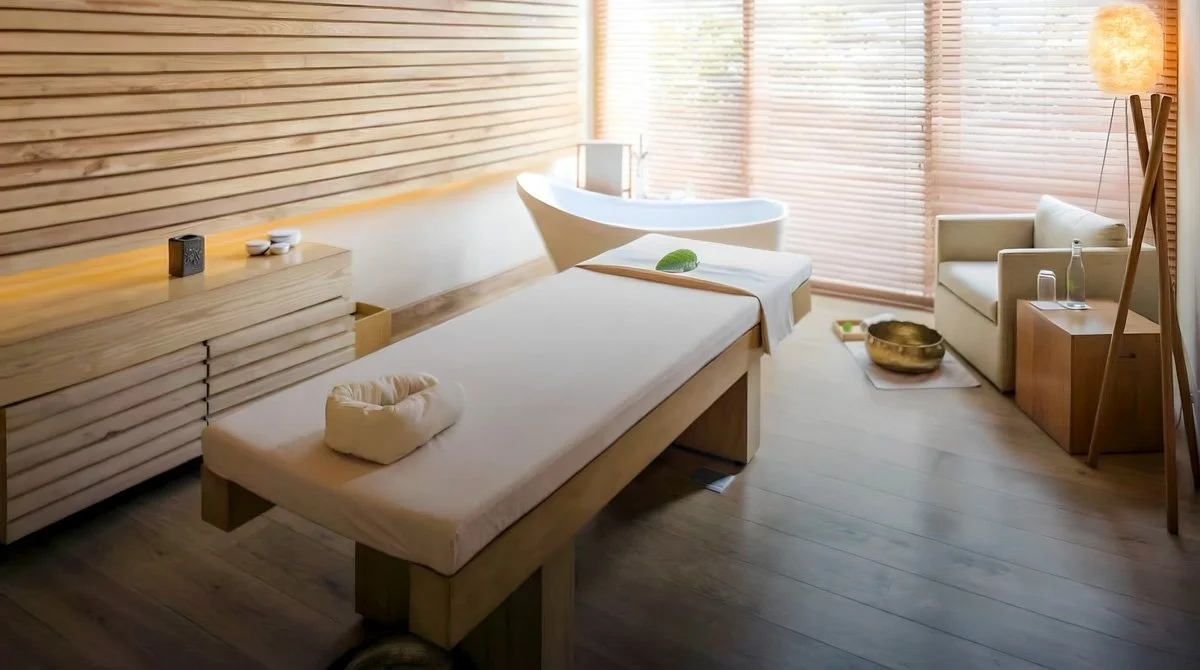
Designing for Longevity (Not Just Today)
A well-designed massage room should age gracefully and adapt to changing needs.
Choose:
Durable, cleanable finishes
Timeless materials over trendy ones
Adaptable layouts for aging-in-place or evolving wellness routines
Wellness isn’t static. Your space shouldn’t be either.
Final Thought: This Is Not a Spa — It’s Yours
The most successful home massage rooms don’t feel like hotels or treatment centers. They feel personal. Grounded. Intentional.
They reflect a shift — toward wellness as daily practice, toward longevity as lifestyle, toward designing spaces that actively support how we want to feel.
And when done right, the room does the first half of the work — before the massage even begins.